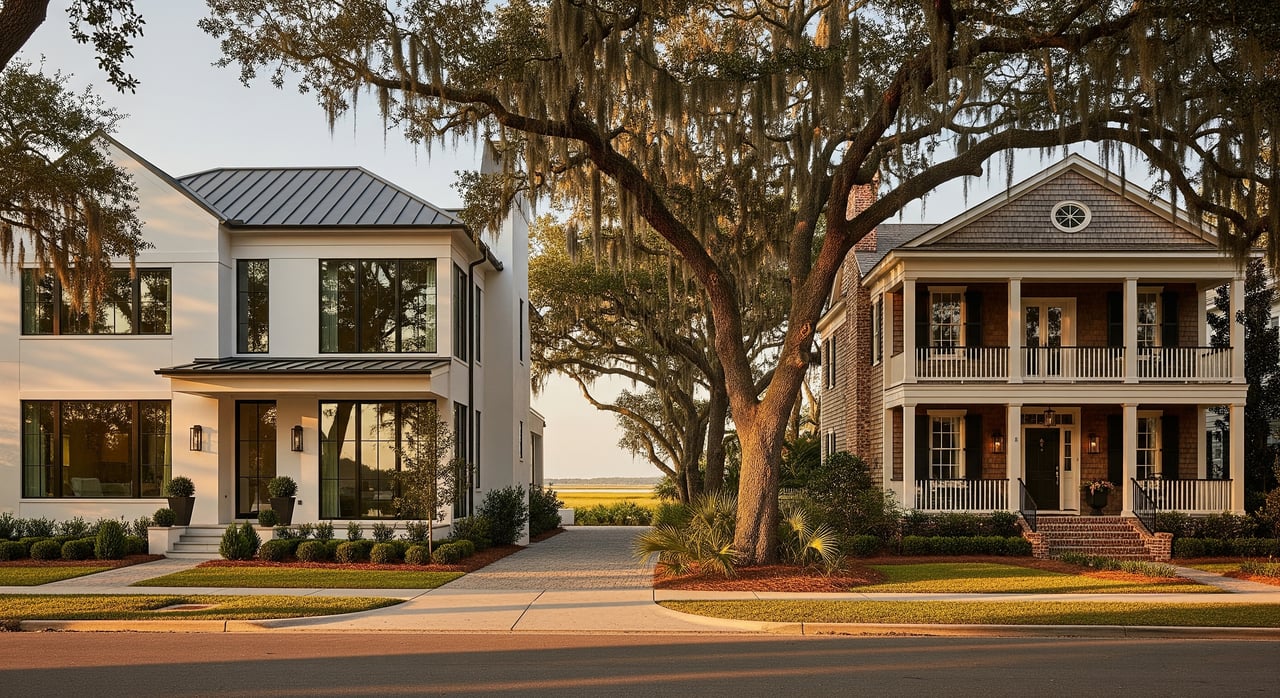
Thinking about a brand-new build on Daniel Island or a move-in-ready resale? Both paths can work well, especially if you are moving up from your current home or purchasing from out of town. The key is understanding how contracts, inspections, timelines, and costs play out here in the Charleston area. In this guide, you’ll compare builder new construction and resale step by step, learn what to negotiate, and see how to protect your budget and timeline. Let’s dive in.
New construction vs resale on Daniel Island
If you want modern layouts, energy efficiency, and the chance to choose finishes, new construction is appealing. You also get layered warranty coverage on materials, systems, and structure. That said, new builds often carry added costs like lot premiums, design-center upgrades, and possible impact or tap fees. Timelines can stretch, and the builder’s contract usually favors their schedule.
Resales can be simpler. You can often close in 30 to 60 days, negotiate price and repairs, and see real utility and insurance costs upfront. The tradeoff is that older systems may need replacement sooner, and the home may not match your ideal layout or finishes without renovation.
On Daniel Island, both options benefit from careful review of HOA standards, flood considerations, and market comps for similar homes. Your choice comes down to priorities: customization and warranties versus speed and negotiation leverage.
Contracts and negotiation: builder vs resale
Builder contracts: what to expect
Builder agreements are usually the builder’s own form and are designed to protect construction timelines and cash flow. Expect clear terms on base price, lot premiums, upgrade allowances, deposit milestones, and when funds become nonrefundable. Completion dates are often “anticipated,” and remedies for delay can be limited unless negotiated in writing.
Pay attention to how change orders are priced and approved, how inspection access is handled during construction, and whether the builder requires using a preferred lender. Confirm who pays for impact fees and utility tap fees, how taxes will be assessed after completion, and what happens if the appraisal comes in short.
Resale contracts: what to expect
Resale purchases typically use standardized agreements with defined contingencies. You usually see customary earnest money, established inspection periods, and clearer remedies if the seller cannot deliver as agreed. You also get seller disclosures and the ability to negotiate repairs or credits based on inspection findings.
For both paths, you should verify title, easements, and HOA covenants, including any initiation fees and design-review obligations. Ask for copies early so you can plan your budget.
Smart negotiation wins for new builds
- Cap nonrefundable deposits and require escrow at an independent title company.
- Define a completion date and add a liquidated damages amount for unexcused delays beyond that date.
- Secure unconditional rights for independent inspections at key stages and before closing.
- Require the builder to correct major defects before closing or hold funds in escrow to ensure completion.
- Specify the warranty start date at closing or occupancy and require written response times for service requests.
Solid strategies for resale
- Use the inspection contingency to negotiate repairs, credits, or price adjustments.
- Set a clear close-by date with remedies if the seller fails to perform.
- Confirm HOA fees and rules early to avoid surprises.
- Review title, easements, and any special assessments before you lift contingencies.
Inspection and warranty game plan
A municipal inspection or lender appraisal does not replace a full home inspection. New homes still benefit from independent inspections, and resales require thorough due diligence.
Staged inspections for new construction
- Pre-foundation or foundation: Confirm grade, waterproofing, and reinforcement before concealment.
- Framing and pre-drywall: Verify structural connections, mechanical routing, and fire blocking.
- Mechanical rough-in: Check plumbing, electrical, and HVAC installation for code compliance.
- Insulation and vapor barrier: Confirm materials and coverage before drywall.
- Final walk-through: Test systems, confirm appliance operation, and build a punch list.
- Post-occupancy: Recheck after 30 to 60 days for settling or trim issues.
- End-of-warranty: Inspect near the end of warranty periods to document claims.
Hire a licensed home inspector with new-construction experience and add specialists as needed, such as a structural engineer or HVAC contractor. Out-of-town buyers should engage an inspector who attends walk-throughs and provides detailed reports and punch lists.
Understanding builder warranties
Most builders offer a layered structure: typically one year for workmanship and materials, two years for major systems, and up to ten years for structural issues. Ask if the structural warranty is backed by a third-party insurer and whether it is transferable. Review what is covered and excluded, claim procedures, response times, and deadlines for reporting a defect.
For resales, request documentation on any active warranties and ask the seller which items are transferable. Keep in mind that manufacturer warranties on appliances or systems may still apply.
Punch lists and service
During the orientation, the builder will record a punch list. Ensure your contract sets deadlines to complete these items and a remedy if the builder misses the timeline. Keep records of communications and warranty claims to support future service requests.
Insurance and risk items to verify
On Daniel Island, confirm flood elevation, drainage, grading, and any floodproofing measures. Ask for termite pretreatment documentation. Consider backflow prevention and sewer line checks where applicable. These items help protect against future maintenance surprises.
Timeline and financing realities
How long it can take
- New construction: Expect 4 to 12 months or more, depending on whether you are buying a spec home or building from the ground up. Weather, permitting, and supply chain can shift schedules.
- Resale: Plan on 30 to 60 days from contract to close, subject to financing, title, and any repair negotiations.
Financing considerations
- Spec or inventory new homes: Often financed with a standard mortgage at closing once the home is complete.
- Ground-up builds: May require a construction or construction-to-permanent loan with interest-only draws. Ask your lender about draw inspections and who pays for them.
- Interest rates: Longer build times can complicate rate locks. Confirm lock terms, extensions, and rate-protection options.
- Appraisals: Custom upgrades can outpace recent comparable sales. If the appraisal falls short, ask the builder about any appraisal-gap solutions and get those terms in writing.
Logistics for out-of-town buyers
Confirm whether a power of attorney or remote notarization is acceptable for closing. Ask about virtual design appointments, digital signatures, and remote walk-through options. A local buyer’s agent can attend meetings, coordinate inspectors, and manage punch lists so you do not miss critical milestones.
Local factors on Daniel Island
Daniel Island is a master-planned community with association rules and design guidelines. Obtain the CC&Rs, fee schedules, and any estoppel letters early. Some lots carry premiums for water views or site complexity, which can drive costs above the base price. Verify who pays for utility connections, tap fees, and any offsite improvements.
Because of proximity to tidal creeks and waterways, confirm the flood zone and any required elevation or stormwater obligations. Ask for elevation certificates if available. Keep your budget flexible for potential HOA initiation costs, insurance, and tax reassessment after completion.
Market dynamics can shift, so review recent comparable sales for both new and resale homes to understand value and appraisal risk. Your agent can pull a current comp set and help you plan upgrades with resale value in mind.
Why independent buyer representation matters
On-site sales agents represent the builder’s interests, not yours. An experienced local buyer’s agent can help you review the contract, negotiate protections, and schedule independent inspections at the right stages. They also know how to interpret HOA documents, manage remote logistics, and coordinate specialists who understand local soil and flood conditions.
In South Carolina, agency roles and disclosures are defined by state rules. Your agent or attorney can explain what duties you are owed and how to structure the agreement to protect your interests from the first offer through the final walk-through.
Quick checklists for buyers
New construction due-diligence checklist
- Read the builder’s contract and warranty documents before you deposit.
- Hire a buyer’s agent with local builder experience.
- Schedule staged inspections: framing, mechanical, and final at minimum.
- Confirm flood zone, elevation certificate availability, and insurance costs.
- Get HOA documents, design guidelines, fee schedule, and estoppel letter.
- Ask for a sample punch list timeline and the warranty claim process.
- Verify permitting status and any outstanding code issues.
- Get a written schedule of allowances and exact upgrade costs.
- Clarify where deposits are held, when they become nonrefundable, and refund conditions.
- Confirm tax assessment expectations and who pays impact or tap fees.
Questions to ask a builder before you sign
- Who does the on-site sales agent represent? Can I receive agency disclosure in writing?
- Is the structural warranty backed by a third-party insurer? May I review the full warranty?
- What is the typical completion time on this lot, and what commonly causes delays?
- Who pays for impact fees, utility taps, and initial HOA fees?
- How are change orders priced, approved, and collected at the design center?
- Can I bring independent inspectors at foundation, framing, mechanical, and final?
- How quickly are punch list items fixed after closing, and what is the policy if items linger?
- Are there known soil, drainage, or seawall requirements for this site?
Resale readiness checklist
- Review seller disclosures and order a full home inspection.
- Verify HOA rules, fees, and any special assessments.
- Confirm flood zone and insurance options for the specific address.
- Negotiate repairs or credits within your contingency period.
- Set a clear closing date and remedies if the seller cannot deliver.
- Review title, easements, and any restrictions before you lift contingencies.
Putting it all together
Choosing new construction or resale on Daniel Island is less about right or wrong and more about fit. If you value customization and warranty safety nets, new construction can be a great choice if you plan for timeline and cost variables. If you need certainty and speed, a resale may get you settled faster with strong negotiation leverage on price and repairs. Either way, a clear contract, staged inspections, and local guidance will keep you in control.
Ready to compare specific homes or lots, estimate your all-in costs, and map your timeline with confidence? Reach out to Andrew Scherl for local representation that puts your interests first.
FAQs
What are the biggest cost surprises with new construction on Daniel Island?
- Lot premiums, design-center upgrades, HOA initiation fees, impact or tap fees, and potential flood insurance can add to the base price.
How long does new construction usually take compared to resale?
- New builds commonly range from 4 to 12 months or longer, while resales often close in 30 to 60 days after contract.
Do I still need inspections on a brand-new home?
- Yes. Independent staged inspections catch issues before they are covered, help build a punch list, and protect your warranty claims.
What should I negotiate in a builder contract?
- Cap nonrefundable deposits, define a firm completion date with delay remedies, secure inspection rights, require pre-close defect cures or holdbacks, and set warranty start and response times.
How do warranties differ between builder new construction and resale?
- Builders typically provide layered coverage for workmanship, systems, and structure, while resales may carry remaining manufacturer or transferable warranties if available.
What special local factors should I check on Daniel Island?
- Review HOA rules and fees, confirm flood zone and elevation certificates, verify utility responsibilities, and understand any site constraints that affect cost and schedule.
I am buying from out of town. How can I manage the process?
- Use a local buyer’s agent to attend walk-throughs, coordinate staged inspections, arrange virtual selections, and confirm closing logistics like power of attorney or remote notarization.