Looking for a home in North Charleston and wondering whether an older house or a newer community fits you better? That is a smart question, because North Charleston is not just one kind of market. You will find historic streets, ranch-style neighborhoods, mixed-use redevelopment, and newer planned communities, often within a short drive of each other. This guide will help you understand how historic homes and new builds shape daily life in North Charleston so you can narrow in on the right fit. Let’s dive in.
North Charleston offers real variety
North Charleston works best when you think of it as a layered housing market rather than a single neighborhood style. The city’s comprehensive planning documents describe a place with older established neighborhoods, 20th-century suburban subdivisions, and 21st-century mixed-use communities connected by major commuter corridors.
That variety shows up in the city’s land use too. North Charleston has a strong mix of residential types, with single-family residential zoning making up 25.3% of zoned land and multi-family residential making up 19.6%. Planned-development and commercial-redevelopment districts add even more options, which helps explain why the city can feel so different from one area to the next.
Historic homes in North Charleston
If you love character, established street patterns, and older neighborhood fabric, North Charleston has several areas worth understanding. Some of the city’s oldest neighborhoods date back well over a century, and they still shape the feel of the market today.
Liberty Hill is one of North Charleston’s oldest neighborhoods, dating to the 1870s. Nearby areas including Cherokee Place, Charleston Heights, Accabee, and Chicora Place were developed between 1903 and 1930, giving this part of the city a long residential history.
Park Circle stands out
Park Circle is one of the clearest examples of North Charleston’s historic side. It was laid out in 1915 as a Garden City-style development, with a central roundabout, radiating streets, and a hub-and-spoke pattern that still gives the area a distinct layout today.
Most of the surrounding housing in Park Circle was built between 1915 and 1940, and many original homes remain intact and in good condition. The city also notes the area’s grid system, traditional lot sizes, and smaller front-yard setbacks, which help create a more traditional urban feel.
For many buyers, that translates into a neighborhood that feels connected and established. You may find older homes with architectural details, mature surroundings, and a street layout that supports a more neighborhood-oriented experience.
Olde North Charleston adds preservation
Olde North Charleston adds another layer to the historic story. Parts of this area are protected by historic and neighborhood conservation overlays, which reflect the city’s effort to preserve neighborhood character over time.
The East Montague corridor between Park Circle and Virginia Avenue also plays a big role in the area’s appeal. The city notes that new streetscapes were added in 2004, and the corridor now functions as a main-street-style strip with shops, restaurants, and small offices.
Older homes are not just one style
Historic housing in North Charleston is not limited to early 1900s cottages or traditional older homes. The city also points to a major housing boom in the early 1940s tied to the Navy Base, which led to neighborhoods like Whipper Barony, Liberty Heights, Liberty Park, Ferndale, and Russelldale.
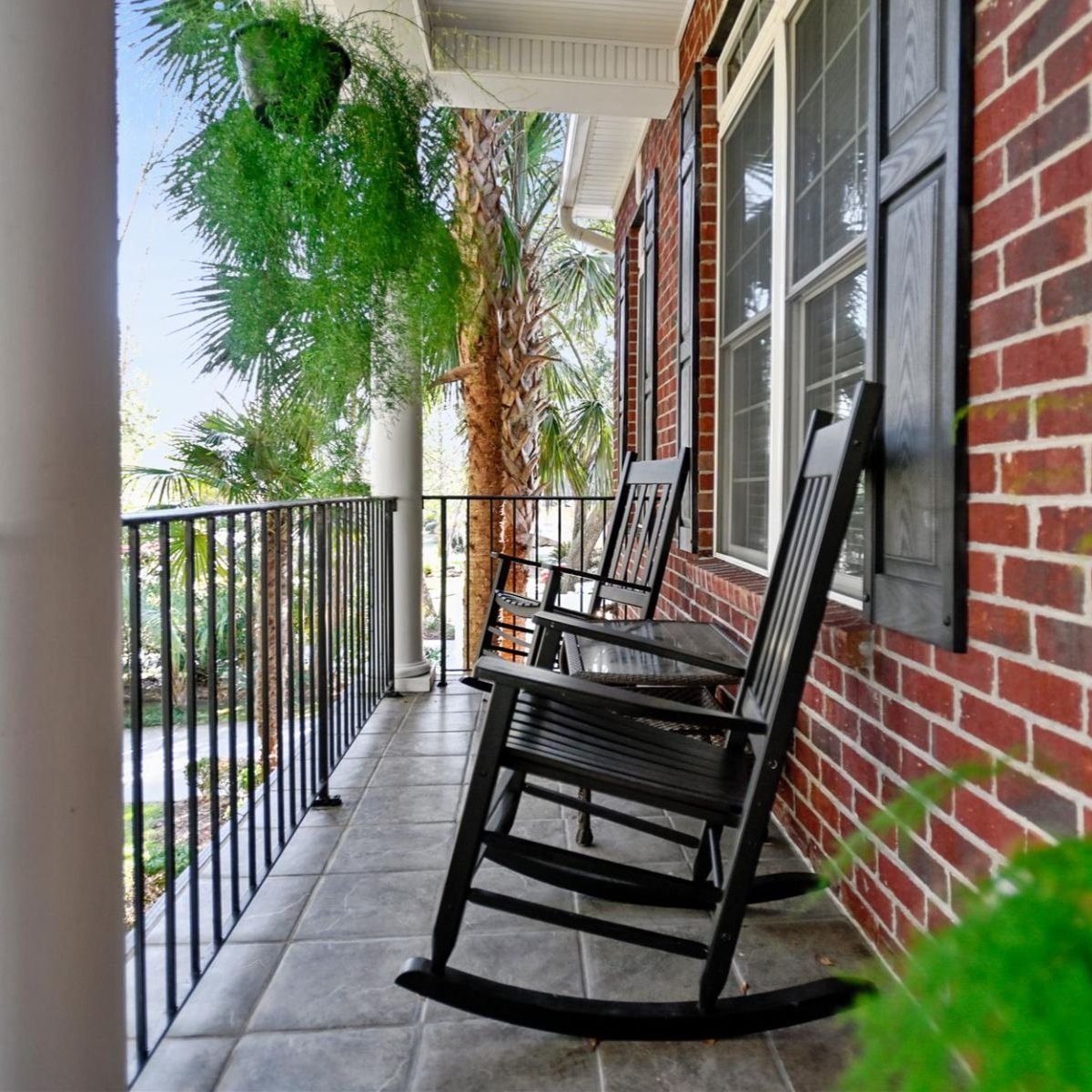
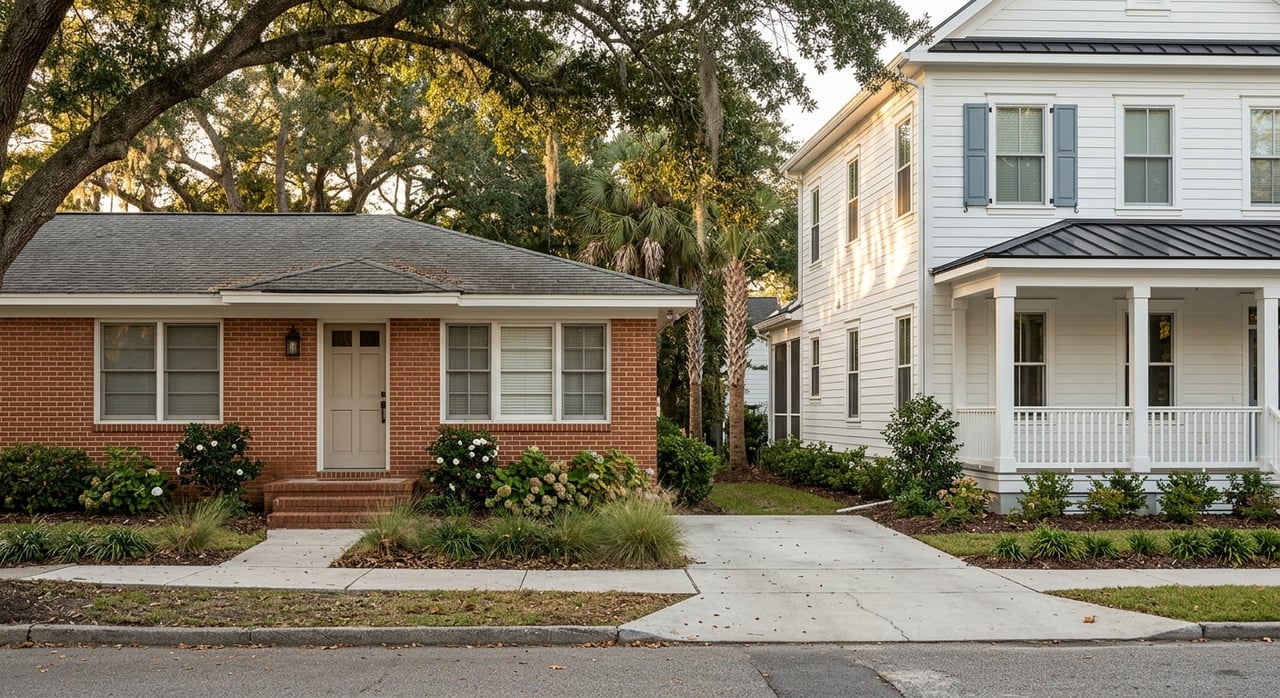
A Charleston County survey found ranch houses to be the most common house type documented in these areas. These homes often feature low horizontal profiles and red-brick veneer, although not every block looks the same.
That matters if you like the idea of an older home but want something more straightforward in layout and upkeep than a very early historic property. In North Charleston, older housing can mean anything from a prewar neighborhood setting to a postwar ranch-heavy subdivision.
New builds and redevelopment in North Charleston
If your priority is newer construction, more recent planning, or mixed-use convenience, North Charleston has a strong newer-development story too. Much of that growth is tied to redevelopment, especially around the Park Circle area and former industrial land.
The city identifies Mixson Avenue and Oak Terrace Preserve as newer or proposed development areas near Park Circle. It also describes Horizon Village as a 68-acre redevelopment on the former North Park Village site with houses and apartments.
Mixson and Oak Terrace Preserve
Mixson is described by the city as a new urbanist mixed-use community at the southwestern corner of Park Circle. That kind of planning often appeals to buyers who want a more organized neighborhood feel with a mix of residential and nearby activity.
Oak Terrace Preserve has a different draw. The city describes it as a sustainable housing project on the former Century Oaks site, built with certified EarthCraft standards along with tree-preservation and stormwater practices.
The community website describes Oak Terrace Preserve as a 55-acre neighborhood accommodating around 370 residences, and builder materials note both single-family homes and townhomes. For buyers comparing home styles, that means newer construction can come with more than one format, not just detached homes.
Horizon Village and adaptive reuse
Horizon Village shows how North Charleston’s newer housing supply can come through redevelopment rather than building on untouched land. The city describes it as a 68-acre redevelopment with both houses and apartments, which adds to the city’s broad mix of housing options.
Another major example is Navy Yard Charleston, the repurposing of the former Charleston Naval Base into a mixed-use redevelopment near Park Circle and the historic Olde Village. This project helps show that in North Charleston, “new” does not always mean entirely brand-new. Sometimes it means adaptive reuse of older structures in a new setting.
The official Navy Yard materials say Storehouse Row reuses early-1900s storehouses, while Storehouse Nine is being adapted into 78 boutique apartments with ground-floor retail, office, and workshop studios. That blend of preservation and reinvention is a big part of North Charleston’s current identity.
How daily life differs by area
When you compare historic homes and new builds, the house itself is only part of the decision. In North Charleston, your day-to-day routine may depend just as much on access to shopping, recreation, major roads, and transit.
The city identifies major commercial corridors including Rivers Avenue, Dorchester Road, Ashley Phosphate Road, Remount Road, West Montague Avenue, University Boulevard, and International Boulevard. It also points to City Center, home to the Coliseum, Convention Center, Tanger Outlets, and Centre Pointe, as a major retail node.
That means errands and entertainment may look very different depending on where you land. Some areas lean into older neighborhood settings near local amenities, while others place you closer to large retail corridors and regional destinations.
Park Circle and Riverfront amenities
For neighborhood-scale lifestyle amenities, Park Circle and Riverfront Park are two important pieces of the picture. The city highlights Park Circle’s recreational fields, disc golf course, surrounding parks, and community center.
Riverfront Park adds a different kind of amenity base, with a waterfront boardwalk, a fishing and crabbing pier, concerts, and event space. If you want easy access to outdoor recreation and community gathering spaces, these areas may stand out in your search.
Commuting and connectivity matter
North Charleston’s growth story is closely tied to mobility. Charleston International Airport is located in North Charleston and sits about 12 miles northwest of downtown Charleston, which can be a major convenience factor for frequent travelers or buyers who value regional access.
Road connectivity is another key factor. SCDOT identifies I-26 and I-526 as major Charleston-area corridors, and current work includes widening I-526 from Rivers Avenue to Paul Cantrell Boulevard as part of the Lowcountry Corridor project.
Transit also adds another layer. CARTA’s Rivers Avenue park-and-ride is served by Express 1, Route 10, and Route 12, and the North Charleston SuperStop is one of the system’s three official transit centers.
The city’s plan also recommends a future intermodal terminal near the Amtrak site as a transit node for high-density residential and mixed-use development. Taken together, these details reinforce that where you live in North Charleston can shape not just your home style, but your commute and everyday convenience.
How to choose between old and new
The best choice usually comes down to how you want to live, not just what year a home was built. North Charleston gives you a chance to compare traditional neighborhood fabric with newer community planning in a relatively compact area.
A historic or older home may appeal to you if you want:
- Established streets and neighborhood character
- Older lot patterns and a more traditional urban feel
- Proximity to areas like Park Circle and Olde North Charleston
- A wider mix of early 1900s homes and postwar ranch-style housing
A newer home or redevelopment area may appeal to you if you want:
- More recent construction or updated planning
- Mixed-use community design
- Options like single-family homes, townhomes, apartments, or adaptive reuse residences
- A setting shaped by redevelopment and long-term growth planning
In many cases, the right answer is not strictly historic or strictly new. North Charleston’s strongest story is the contrast between the two, and how both connect to convenience, redevelopment, and housing choice.
Why North Charleston attracts different buyers
North Charleston appeals to a wide range of buyers because it does not force you into one housing model. You can focus on older homes near long-established neighborhood patterns, or you can explore new construction and redevelopment near mixed-use growth areas.
That flexibility is especially useful if you are balancing budget, commute, home style, and lifestyle goals at the same time. It also makes local guidance valuable, because two homes with similar square footage can offer very different neighborhood experiences depending on where they sit within the city.
If you are weighing historic homes against new builds in North Charleston, a local, neighborhood-by-neighborhood approach can save you time and help you make a more confident decision. When you are ready to compare options, Andrew Scherl can help you narrow down the right fit for your goals.
FAQs
What types of homes can you find in North Charleston?
- North Charleston includes older established neighborhoods, postwar ranch-heavy subdivisions, newer planned communities, mixed-use redevelopment, and multi-family housing.
What makes Park Circle unique in North Charleston?
- Park Circle was laid out in 1915 with a Garden City-style plan, and it is known for its central roundabout, radiating streets, traditional lot sizes, and housing largely built between 1915 and 1940.
Are there new-build communities near Park Circle in North Charleston?
- Yes. City planning documents identify communities and redevelopment areas near Park Circle including Mixson, Oak Terrace Preserve, Horizon Village, and Navy Yard Charleston.
What is Oak Terrace Preserve in North Charleston?
- Oak Terrace Preserve is a sustainable housing project on the former Century Oaks site, built with certified EarthCraft standards and supported by tree-preservation and stormwater practices.
How does commuting affect where you should live in North Charleston?
- North Charleston is shaped by major corridors like I-26, I-526, Rivers Avenue, Dorchester Road, and other key roads, along with CARTA transit options and airport access, so commute patterns can play a big role in choosing the right area.
Is North Charleston mostly historic homes or mostly new development?
- It is a mix of both. North Charleston is best understood as a layered market with historic areas, postwar neighborhoods, suburban subdivisions, and newer mixed-use redevelopment.