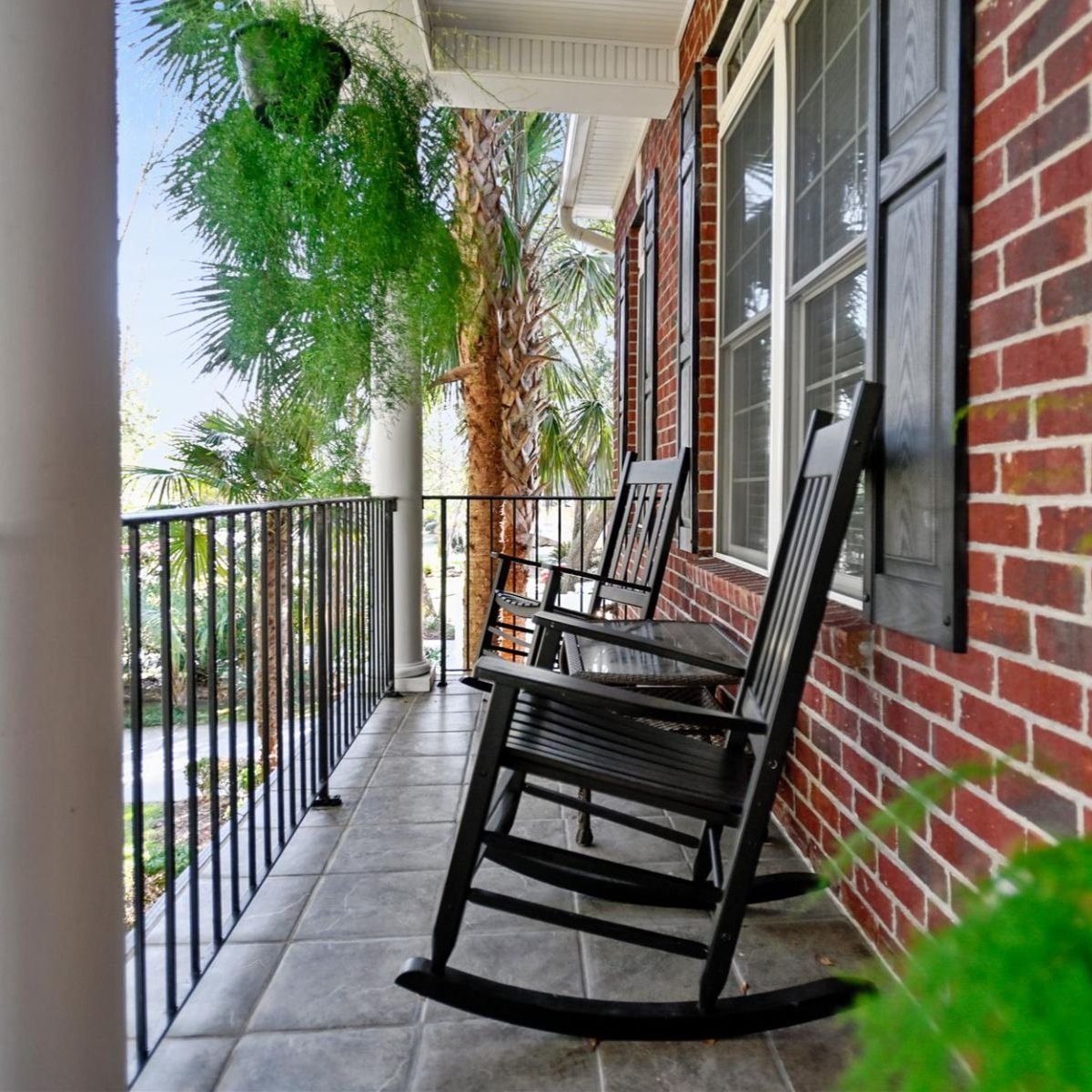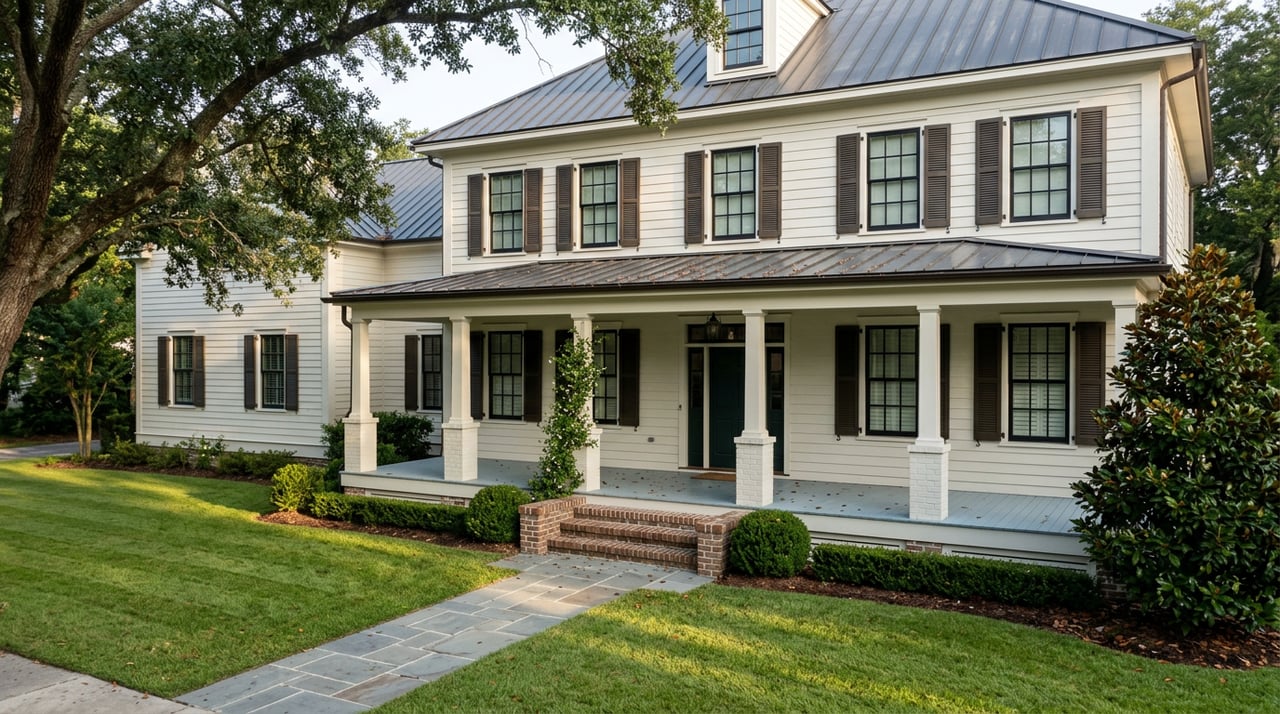
Pull up North Charleston listings after a week of scrolling Mount Pleasant and Daniel Island prices, and the city looks like relief. Then you filter for Park Circle, the neighborhood every relocation guide tells you to look at first, and the relief disappears. The homes cost as much as the ones you were trying to escape.
That whiplash isn't a glitch in your search. It's the median doing something medians are bad at: describing a city that is, in practical terms, two separate housing markets sharing a municipal boundary. If you're comparing North Charleston to other Charleston-area submarkets right now, the number you saw on your first search tells you almost nothing about what a specific address will cost. Here's the split, and why it exists.
The number on the portal isn't wrong. It's incomplete.
As of May 30, 2026, the Charleston Trident Association of Realtors put the median price of a single-family home in the North Charleston area at $345,000, with attached townhomes and condos running lower at $265,000, according to reporting in the Post and Courier. That's a real, current, well-sourced figure. It's also an average of neighborhoods that have almost nothing in common except a city limit.
North Charleston covers ground from the Cooper River to Ashley Phosphate Road, and the price you'll pay depends enormously on which few square miles you mean. Treating that $345,000 figure as a stand-in for "what a house costs in North Charleston" is a little like averaging the price of a studio apartment and a four-bedroom house and calling the result the price of housing. Both numbers are true. Neither one is the number you'll actually pay for the specific kind of home you want.
Where the premium actually lives
If you've spent any time researching this market, you already know Park Circle is the name that comes up. What the citywide median doesn't tell you is how much of a premium that name now carries.
New construction is a clean way to see it. DRB Homes is currently building The Walk at Park Circle, a 28-townhome development on Valdosta Street, with its Park Circle Townhomes collection (3 to 4 bedrooms, roughly 1,900 square feet) starting at $479,990 and its similarly sized single-family line starting at $529,990, per the same Post and Courier reporting. That's $135,000 to $185,000 above the citywide single-family median, for homes that haven't even been lived in yet. Nearby, the green-certified Oak Terrace Preserve and the Mixson community have added more of the new-construction inventory that keeps this specific pocket priced well above the rest of the city.
This is the part of the story most guides skip: Park Circle isn't just a nicer neighborhood inside an affordable city. It's the reason "North Charleston is affordable" stopped being a complete sentence. The walkable streets, the restaurant density, the historic bungalow stock that's been renovated over the last decade, these are exactly the features that pulled Park Circle's own median away from the citywide number and toward Mount Pleasant territory.
A median that moved three different directions in the same month
Here's where it gets genuinely useful for anyone trying to time a purchase or price a listing. Look at how differently Park Circle's own price trend got reported for roughly the same stretch of 2026:
| Data cut | Period | Median reported | Year-over-year change |
|---|---|---|---|
| Neighborhood sale-price index | June 2026 | ~$600,000 | up about 14% |
| Same index, market-trends view | June 2026 | ~$522,000 | down about 12% |
| Asking-price median, listing platform | July 2026 | $559,000 | down about 7% |
Three legitimate reads of the same neighborhood, in the same season, pointing in different directions. That's not three different markets disagreeing about value. It's one small, thinly traded market where the median is unusually sensitive to whichever handful of houses happened to close.
Park Circle sold as few as 29 homes in December 2025, down from 39 the December before. When a monthly median rests on three or four dozen closings, one architect-driven renovation that sells for $900,000 or one estate sale that closes fast and cheap can swing the reported figure by ten percent or more in either direction. That's not the market correcting itself. That's arithmetic reacting to a small sample. If you're using a single month's median to decide whether now is the right moment to list a Park Circle home or to make an offer on one, you're reading noise as signal.
The practical fix is the one we'd give any client comparing pockets like this: pull comps from the specific streets and price band you're targeting, over a window of several months, not a single month's headline number from any one source.
The other side of the average
The other half of what makes the citywide median so misleading sits at the opposite end of the price range, in North Charleston's south end. Chicora-Cherokee, Union Heights, Accabee, Dorchester Terrace, and Waylyn have carried the city's overall median sale price from $160,000 to $360,000 over the past decade, according to Charleston Trident Association of Realtors data cited in the Post and Courier. That's more than double in ten years, and it's happening in an area a Post and Courier property analysis found to be more dominated by rental-owned properties than any other residential pocket in Charleston County.
That combination, rising values plus heavy investor ownership, is exactly the setup that produces a homeownership gap even as prices climb. It's part of why the nonprofit Bridge North Charleston built North Bridge Townhomes off Meridian Road near Azalea Drive and Cosgrove Road, aimed specifically at getting more owner-occupants into a corner of the city that's mostly landlord-held. Whatever your reason for looking at this end of North Charleston, whether it's an entry-level purchase or an investment property, know that you're buying into a submarket with a different ownership structure than Park Circle's, and that structure affects everything from the comps you'll find to how quickly a renovated house stands out.
What this means if you're comparing
A few things worth doing before you anchor a budget to any North Charleston number you've seen online:
- Ask which property type the median you're looking at reflects. Single-family and attached product carry an $80,000 gap by themselves, per the current CTAR split.
- If Park Circle is on your list, price new construction separately from resale. The Walk at Park Circle's $479,990 to $529,990 starting range is a better anchor for that specific product than any citywide figure.
- Treat any single month's neighborhood median as a data point, not a verdict, especially in a submarket moving three dozen homes a month or fewer.
- If you're comparing north-end and south-end pockets within the same city, factor in how much of the inventory is investor-owned. It changes both the comps and the negotiating dynamic.
If you want to see how these numbers play out on a specific street or in a specific price band, our North Charleston neighborhood page breaks down more of the pockets we work in regularly, and our post on pricing a North Charleston home today goes deeper on comp selection for sellers.
A few questions we hear often
Is North Charleston still an affordable entry point into the Charleston metro? Large parts of it, yes. The citywide single-family median of $345,000 as of May 2026 is still well below Mount Pleasant or downtown Charleston. Park Circle specifically has moved out of that affordable-entry category.
Why did Park Circle get so much more expensive than the rest of North Charleston? A run of renovated historic bungalows plus new construction from builders like DRB Homes and communities like Oak Terrace Preserve and Mixson concentrated demand in one walkable, restaurant-dense pocket, pulling its median well above the citywide figure.
How do I know if a "North Charleston" comp actually applies to my situation? Ask for the specific streets included, the property type, and the month range. A comp set that mixes Park Circle new construction with south-end resale homes will mislead a buyer or seller in either direction.
If you're trying to figure out which North Charleston pocket actually fits your budget and your goals, that's exactly the kind of comparison Andrew Scherl walks clients through every week. Reach out for a pocket-specific market read, or start with a free home value estimate if you're weighing whether now is the moment to sell.